The dream of fully automated home electric vehicle charging is moving from sci-fi prototype to commercial reality. In a move that directly challenges legacy automakers and EV pioneers alike, Xiaomi Auto has officially announced the upcoming launch of its new home charging robotic arm. Slated for a commercial release in the fourth quarter of 2026, the system promises to completely eliminate the need for drivers to handle heavy, dirty charging cables.
The announcement represents a significant milestone for Xiaomi, the consumer electronics giant that has rapidly expanded from smartphones into a formidable force in the automotive sector. By bridging the gap between automated parking and autonomous charging, the company is aiming to establish a seamless, hands-free ecosystem for its growing lineup of electric vehicles.
Delivering on a Decade-Old Industry Promise
For long-time EV enthusiasts, the concept of a self-plugging charger is highly familiar. Back in 2014, Tesla CEO Elon Musk teased a robotic charging solution that would automatically slide out from a garage wall and connect to a vehicle like a “solid metal snake.” While Tesla showcased a working prototype in 2015, the project was ultimately shelved as the American automaker pivoted toward wireless charging solutions for its future autonomous fleet.
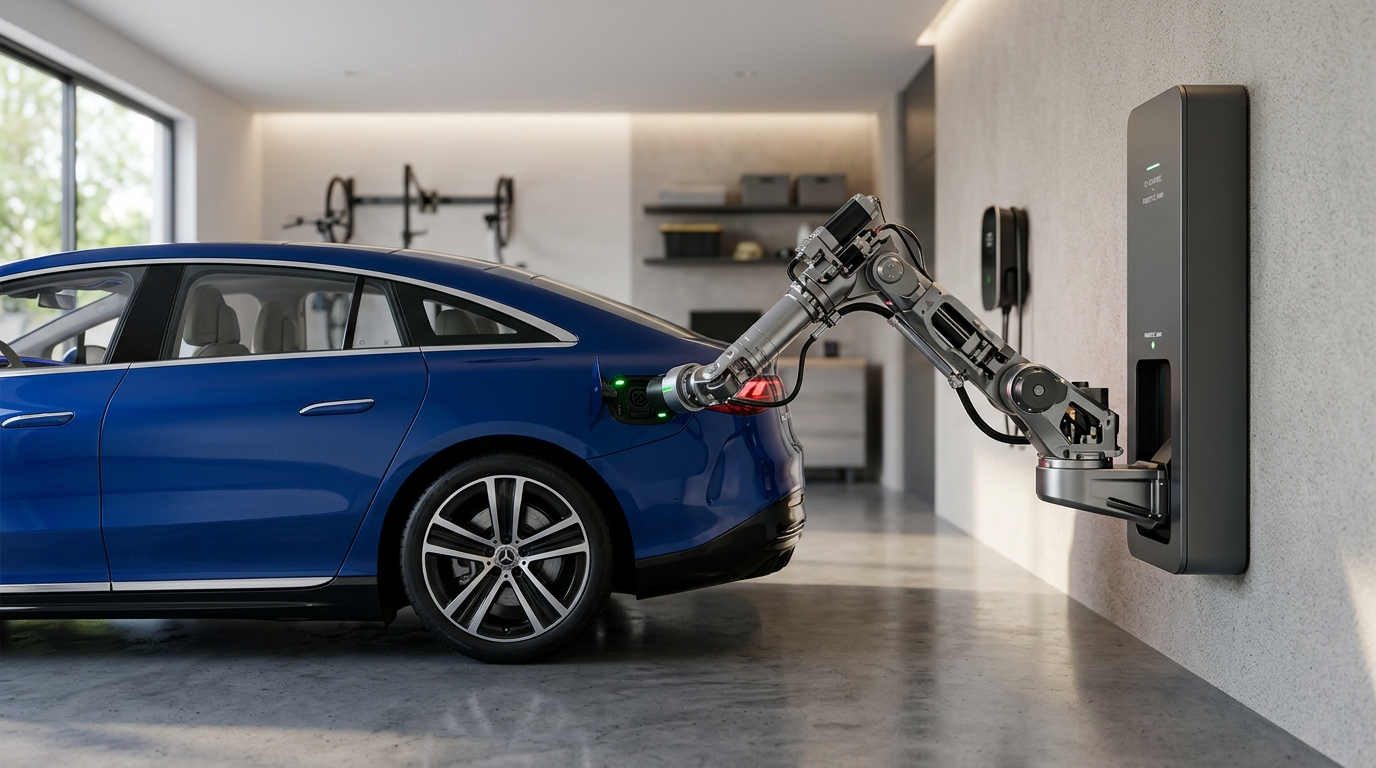
Now, Xiaomi has successfully commercialized the concept. The newly unveiled robotic arm is designed specifically for residential garages and private parking spaces. Unlike bulky industrial machinery, the unit is incredibly compact, featuring a slim enclosure that measures less than six inches (152 millimeters) wide. This ensures it can fit easily into tight home garages alongside existing wall-mounted charging stations.
AI Vision and Sub-Millimeter Precision
The core technology driving the robotic arm relies heavily on advanced software and machine learning. To ensure safe and reliable operation, the multi-segment robot utilizes artificial intelligence vision recognition. This allows the system to locate the vehicle’s charging port with sub-millimeter precision, adjusting for slight variations in how the car is parked.
The system is designed to operate across three primary convenience scenarios:
- “Lazy” Charging: Once the driver parks the vehicle within range, the robotic arm automatically extends, opens the car’s charging port cover, and plugs in the connector. No manual intervention or physical commands are required.
- Automatic Unplugging: When the vehicle’s battery reaches 100% capacity—or a custom limit predefined by the owner—the robotic arm automatically disconnects, retracts, and neatly folds back into its slim enclosure.
- Remote Activation: If an owner chooses not to charge immediately upon parking, they can initiate the entire process remotely via a smartphone application from anywhere in the world, provided the car is parked within the system’s physical reach.
Expanding the Smart Home Ecosystem into the Garage
By launching this product, Xiaomi Auto is leveraging its massive existing smart home ecosystem to create a unique selling proposition. The company already dominates the smart appliance market in China, and integrating the EV charger into its existing IoT platform allows the robotic arm to communicate seamlessly with other connected devices.
Currently, the automated charging system is designed to work with Xiaomi’s own electric vehicles, including the highly successful Xiaomi SU7 sedan and the newly introduced Xiaomi YU7 crossover. The robotic arm will complement the brand’s existing lineup of 7kW and 11kW home charging piles, transforming standard residential garages into fully automated smart hubs.
Market Outlook and Commercial Availability
While Xiaomi has not yet disclosed the official pricing details for the robotic charging arm, the company confirmed that the promotional video showcasing the technology was filmed in a real-world setting using production-ready hardware rather than digital special effects. This indicates that the technology is highly mature and ready for mass production.
The product is scheduled to launch first in China during the final months of 2026. As Xiaomi continues to lay the groundwork for its planned global expansion into European and other international markets, proprietary convenience technologies like this automated charger could serve as a powerful tool to win over premium EV buyers worldwide.